
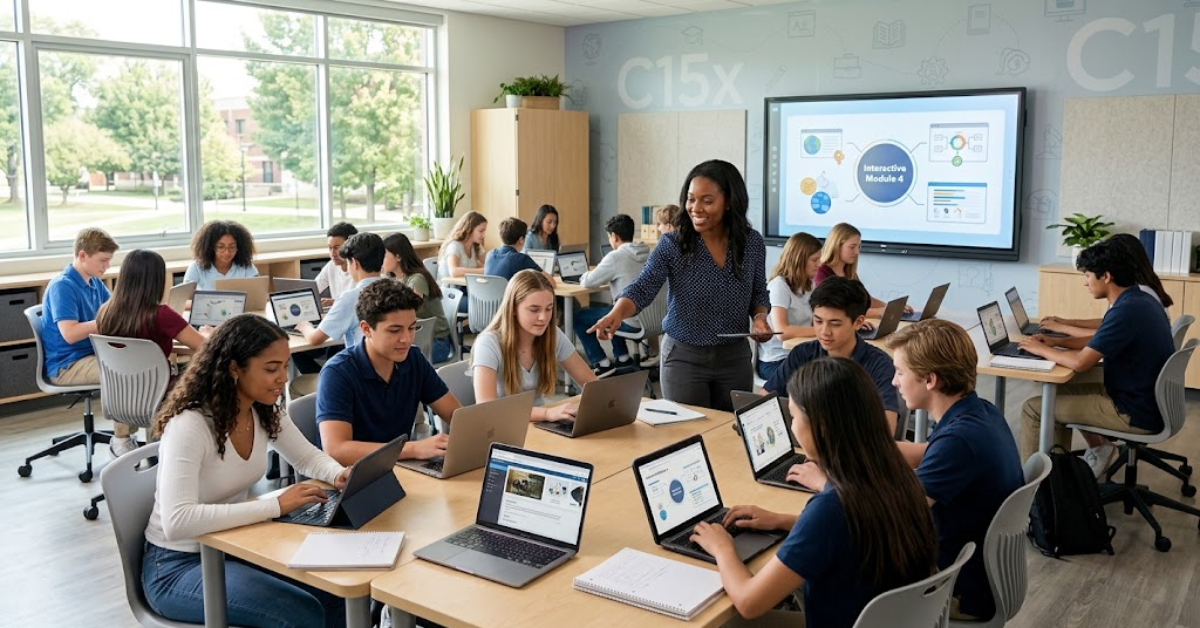
Education continues to change as technology becomes a bigger part of everyday life. Students now have access to digital resources, interactive lessons, online activities, collaborative tools, and personalized learning experiences. As a result, many educators are looking beyond the traditional classroom and exploring more flexible ways to teach.
One concept that has gained attention online is Classroom 15x. The term appears in different educational contexts, so it does not represent one universally standardized teaching framework. However, many descriptions connect it with flexible learning spaces, digital technology, personalized instruction, smaller learning groups, collaboration, and interactive activities.
The idea fits naturally with the growing demand for learning environments that encourage students to participate instead of simply listening. Rather than depending entirely on lectures and fixed seating, Classroom 15x focuses on creating an adaptable experience that can support different learning styles and activities.
What Is Classroom 15x?
Classroom 15x describes a modern approach to organizing learning around technology, flexibility, student participation, and personalized support. Instead of treating every learner in exactly the same way, the approach encourages teachers to consider individual needs, abilities, interests, and progress.
Some online descriptions associate the number 15 with smaller groups of approximately 15 students. Other sources use the “15x” name more broadly to describe an ambitious improvement in the learning experience. Since these interpretations differ, it makes more sense to view Classroom 15x as a collection of modern educational ideas rather than a formally defined system.
At its heart, the concept aims to make learning more interactive and adaptable. Students can move between individual work, group activities, digital exercises, discussions, projects, and teacher-guided sessions. Consequently, the classroom becomes more than a physical room. It becomes an environment where different learning activities can happen throughout the day.
How Technology Fits Into Classroom 15x
Technology plays an important role in the modern interpretation of Classroom 15x. Computers, tablets, interactive displays, educational applications, cloud platforms, and other digital resources can support lessons and give students additional ways to understand difficult subjects.
For example, a teacher might introduce a science topic through an interactive simulation. Students could then research the subject online, discuss their findings with classmates, and complete a practical assignment. This combination gives learners several opportunities to process the same concept.
Digital tools can also provide quick feedback. When students complete an online exercise, they may receive immediate information about their answers. Therefore, they can identify mistakes and try again while the topic remains fresh.
However, technology should support teaching rather than replace it. A screen alone cannot guarantee better learning. Teachers still play an essential role by explaining concepts, answering questions, encouraging discussion, and helping students develop good learning habits.
Personalized Learning
One of the strongest ideas associated with Classroom 15x involves personalized learning. Traditional lessons often give every student the same material at the same pace. That method can work for some learners, but others may need additional explanation or more challenging work.
A flexible learning environment gives teachers more opportunities to respond to those differences.
For instance, one student may need extra mathematics practice while another student already understands the topic and needs a more advanced challenge. Digital platforms can help teachers provide different activities without completely separating the class.
Furthermore, personalized learning can encourage students to take greater responsibility for their progress. They can set goals, monitor completed work, review difficult topics, and spend additional time where they need it most.
This approach does not mean that every student must follow a completely different curriculum. Instead, teachers can combine shared lessons with individual activities and targeted support.
Flexible Classroom Spaces
The physical classroom also matters. A modern Classroom 15x environment can use movable desks, group tables, quiet areas, presentation spaces, and technology stations.
During a group project, students can work together around a shared table. Later, they can move to individual workstations for focused study. A teacher can also create a discussion area for presentations or class conversations.
This flexibility can make the room more suitable for different activities. Rather than forcing every lesson into the same seating arrangement, teachers can adjust the environment according to the purpose of the lesson.
Even schools with limited budgets can adopt some of these ideas. They do not necessarily need expensive furniture or sophisticated technology. Simple changes, such as rearranging desks, creating quiet study areas, and using shared digital resources, can introduce greater flexibility.
Interactive Learning
Students often learn more actively when they participate in the learning process. Classroom 15x encourages activities that can involve discussion, projects, problem-solving, experiments, presentations, and interactive digital exercises.
Instead of simply reading about a subject, students may have an opportunity to apply what they have learned.
Suppose students study environmental science. Rather than completing only a written worksheet, they could research local environmental problems, work in small groups, prepare solutions, and present their ideas. Such activities can develop academic knowledge while also encouraging communication and teamwork.
Interactive learning can also make lessons feel more relevant. When students understand how an idea connects with real situations, they may find it easier to remember and apply that knowledge.
The Role of Online Learning
Online learning has become an important part of modern education. Students can access educational materials from computers, tablets, and other connected devices. This flexibility can help learners continue studying beyond the traditional classroom.
Classroom 15x fits naturally into this environment because digital resources can complement face-to-face teaching. A teacher might introduce a topic during a classroom session and then provide online exercises for additional practice.
Similarly, students can use digital libraries, educational videos, interactive activities, and collaborative platforms when working on projects.
Blended learning can provide another useful option. Students can combine classroom instruction with online study instead of relying entirely on one format.
This flexibility becomes especially valuable when students have different learning speeds. Someone who needs more time can review a lesson again, while another learner can move forward with additional material.
Collaboration and Communication
Modern education requires more than memorizing information. Students also need communication, teamwork, creativity, and problem-solving skills.
Classroom 15x encourages collaboration through group projects and shared activities. Students can discuss ideas, divide responsibilities, solve problems together, and present their results.
Group work can also teach students how to handle different opinions. They may not always agree with classmates, but they can learn to listen, explain their reasoning, and reach practical solutions.
Online collaboration tools can extend this experience beyond the classroom. Students can work together on shared documents, presentations, research projects, and other digital assignments.
Benefits for Teachers
Students are not the only people who can benefit from a more flexible learning environment. Teachers can also gain useful tools and greater flexibility.
Digital platforms can help teachers organize learning materials, monitor progress, provide feedback, and identify areas where students need additional assistance.
At the same time, technology can reduce some repetitive tasks. For example, an online exercise may automatically record results, allowing the teacher to spend more time helping students understand difficult concepts.
However, teachers need appropriate training to make the most of these tools. Simply adding technology to a classroom does not automatically create better education. Effective implementation requires planning, training, reliable resources, and clear learning goals.
Challenges of Classroom 15x
Despite its potential advantages, Classroom 15x also presents challenges.
The first challenge involves cost. Devices, interactive displays, reliable internet connections, software, and flexible furniture can require significant investment. Schools with limited budgets may need to introduce changes gradually.
Teacher training presents another challenge. Educators need time to learn new tools and understand how to integrate them into lessons without creating unnecessary distractions.
Technology access can also differ between students. Some learners may have reliable devices and internet connections at home, while others may not. Schools therefore need inclusive strategies that prevent technology from creating additional educational gaps.
Screen time requires careful management as well. Digital activities should have a clear purpose. Students still need movement, conversation, hands-on experiences, reading, and face-to-face interaction.
Finally, schools need to evaluate whether new tools actually improve learning. Popular technology does not automatically produce better results. Educators should focus on outcomes rather than simply adding more devices.
Is Classroom 15x a Standard Educational System?
An important point deserves attention: Classroom 15x does not appear to represent one universally recognized or standardized educational framework. Different websites describe the term in different ways, including flexible classroom design, technology-supported learning, smaller learning groups, and online interactive activities.
Because of this variation, readers should avoid treating every claim associated with the name as an established educational fact.
Instead, it is more useful to focus on the principles commonly connected with the concept: flexibility, student participation, digital support, collaboration, personalization, and practical learning.
Classroom 15x and the Future of Education
Education will continue to evolve as technology develops. Artificial intelligence, virtual reality, adaptive learning software, interactive simulations, and improved collaboration platforms may give teachers even more ways to support students.
However, the future of education will not depend on technology alone. Good teaching will remain important.
The most effective learning environments will likely combine human guidance with useful digital resources. Teachers can provide encouragement, context, feedback, and emotional support, while technology can offer flexible resources and additional practice.
Classroom 15x represents this broader movement toward adaptable and student-centered education. Its most valuable lesson may not involve any particular device or application. Instead, it encourages educators to ask a simple question: how can the learning environment better support the students inside it?
Conclusion
Classroom 15x reflects the changing nature of education. Its modern interpretation brings together flexible spaces, digital resources, personalized learning, collaboration, and interactive activities.
Rather than depending on one teaching method, the approach encourages educators to use different strategies for different situations. Students can work independently, collaborate with classmates, explore digital resources, participate in practical activities, and receive targeted guidance from teachers.
At the same time, schools must introduce these ideas carefully. Technology needs a clear purpose, teachers need proper support, and students need a healthy balance between digital and traditional learning.
Ultimately, Classroom 15x is best understood as an evolving educational concept rather than a single fixed system. Its focus on flexibility and engagement reflects an important direction in modern education: creating learning environments that adapt to students instead of expecting every student to learn in exactly the same way.
